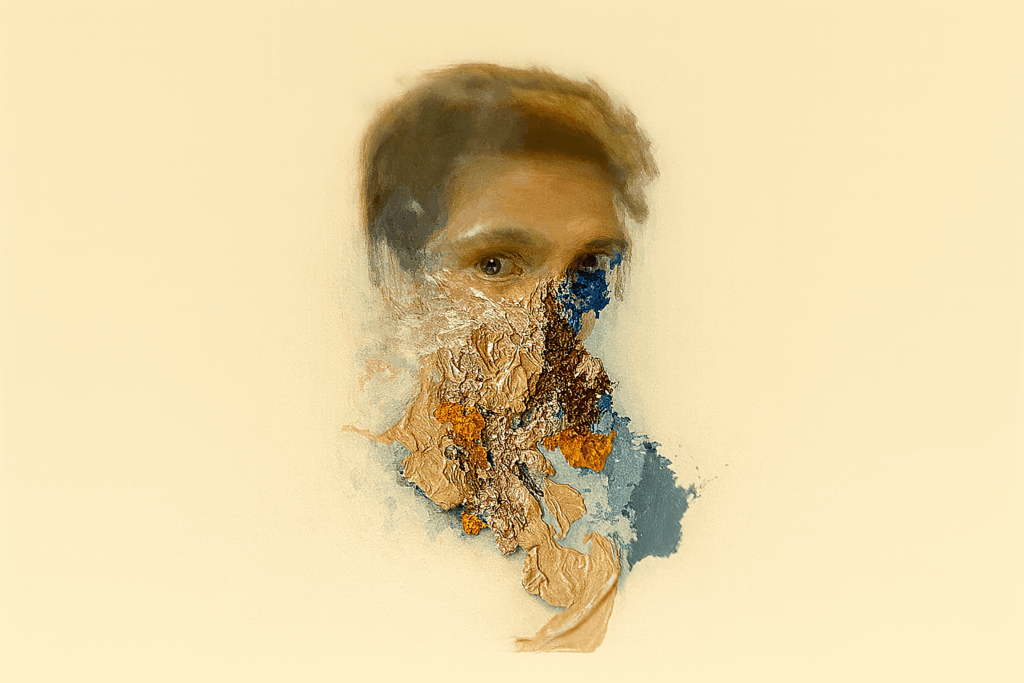
Are slips of the tongue merely random and insignificant mistakes? According to Sigmund Freud, the founder of psychoanalysis, the answer is no. In his work The Psychopathology of Everyday Life, Freud describes slips of the tongue not as accidental errors, but as meaningful clues that reveal something about our inner world.
In everyday life, the feelings we are consciously aware of can be compared to the visible tip of an iceberg. The unconscious, on the other hand, represents a much larger and hidden part beneath the surface. It is this unconscious dimension that often shapes our behaviors, decisions, and ways of relating.
For various reasons, we tend to push certain feelings and desires into the unconscious — we repress them. Social expectations, fear of criticism or punishment, shame, and guilt can all lead us to bury these experiences. Sometimes these involve socially unacceptable impulses such as anger or sexuality; at other times, they may be deeply painful or traumatic experiences.
However, nothing that is repressed completely disappears. Instead, it finds alternative ways to emerge. Slips of the tongue are one of the most well-known examples of this. While intending to say one thing, a completely different word may come out. In such moments, it is as if repressed thoughts and feelings momentarily “leak” into speech — offering valuable insight into our inner world.
Examples of Slips of the Tongue
For instance, imagine a politician who is about to begin an important meeting but accidentally says, “I declare the session closed” instead of “I declare the session open.” This slip might reflect an unconscious reluctance or resistance toward starting the meeting.
Or consider someone who accidentally says another person’s name instead of their partner’s during a wedding ceremony. This could reflect repressed feelings toward that other person. A well-known example is from the TV show Friends, when Ross Geller says “I take Rachel…” instead of “Emily” at the altar.
Similarly, if an employee calls their boss “Mr. Slight” instead of “Mr. Bright,” this slip might indicate an unconscious tendency to belittle or diminish that person.
Some slips are more symbolic. For instance, saying “pubic” instead of “public” may, from a psychoanalytic perspective, reflect the emergence of repressed sexual content.
At times, slips occur simply because we are thinking about multiple things at once and unintentionally blend words together. These slips do not necessarily carry unconscious meaning. For example, combining “smoke” and “fog” into “smog” may reflect the mind processing multiple ideas simultaneously, rather than the emergence of unconscious content.
Why Do Slips of the Tongue Occur?
Certain conditions make slips of the tongue more likely to occur. When unconscious feelings become particularly intense, it may be harder to keep them repressed. If the intended word and the spoken word are similar (such as “Mr. Slight” and “Mr. Bright”), the likelihood of a slip increases.
Mental fatigue or stress can also weaken our ability to maintain repression, allowing unconscious material to surface more easily.
Understanding Slips of the Tongue
Some slips are clear enough to be interpreted on their own, while others require deeper reflection and analysis. Slips of the tongue are fascinating; they offer a unique window into our inner world. For this reason, rather than dismissing them as mere “coincidences,” it is important to stay curious about what they might be telling us. Asking ourselves, “What does this word that slipped out make me think of?” can be the first step toward greater awareness.
In psychodynamic psychotherapy, this process is supported through the technique of free association; expressing thoughts without censorship. Sometimes clients become aware of their slips during therapy; at other times, the therapist notices and helps make sense of them. These small “mistakes” can offer valuable insights into how the unconscious expresses itself.
Ultimately, all these examples remind us that the primary forces shaping human behavior lie beneath the surface — in the unconscious. As Freud famously stated: “Repressed thoughts always find a way to express themselves.”
Reference:
Freud, S. (1901). The Psychopathology of Everyday Life